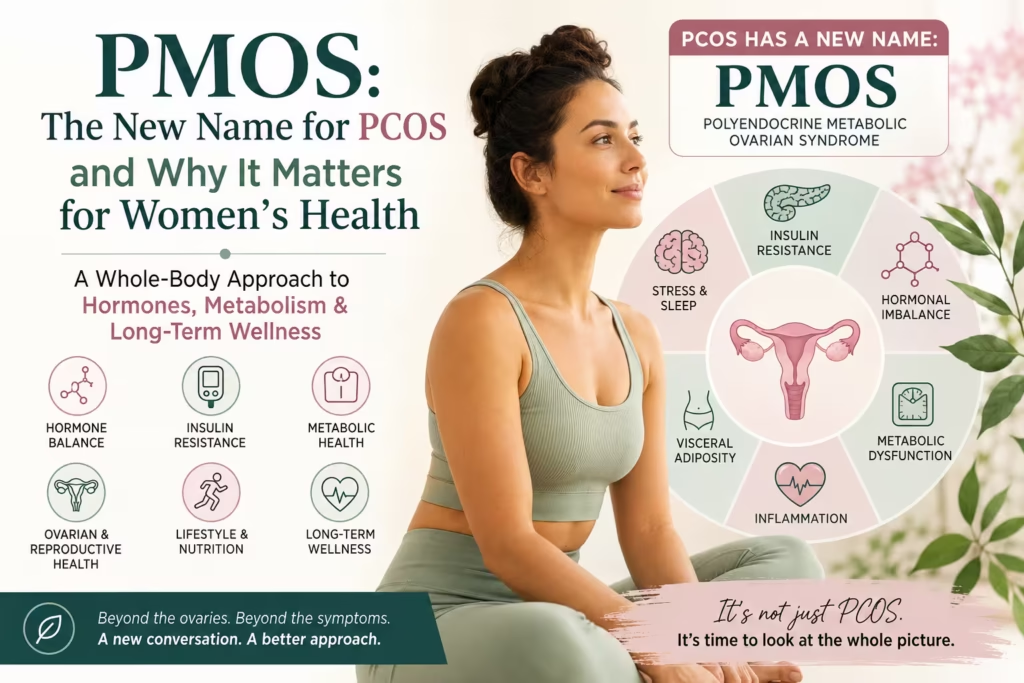

PCOS Has a New Name: PMOS
If you’ve been following women’s health news recently, you may have noticed a new acronym making headlines: PMOS.
PMOS stands for Polyendocrine Metabolic Ovarian Syndrome, the new name for what has historically been known as Polycystic Ovary Syndrome (PCOS).
In May 2026, an international consensus involving patients, clinicians, researchers, and more than 50 professional and patient organizations formally adopted the new terminology. While the name change may seem minor at first glance, it represents a major shift in how we understand and approach this common condition.
From a functional medicine perspective, the new name is a welcome development because it finally recognizes that the condition involves far more than the ovaries alone.
The Ovaries Were Never the Whole Story
For years, many healthcare providers have focused on the ovarian findings associated with PCOS. Yet the ovaries have never been the entire story.
In fact, one of the biggest misconceptions surrounding PCOS is that it is primarily a disease of ovarian cysts.
The reality is much more complex.
PMOS is a multifaceted hormonal and metabolic disorder involving interactions between:
- Insulin signaling
- Androgen production
- Metabolism
- Body-fat distribution
- Ovarian function
- Reproductive health
Among these factors, insulin resistance plays a particularly important role.
Many women with PMOS experience insulin resistance, including women who are not overweight. When insulin levels remain elevated, they can stimulate the ovaries to produce excess androgens while simultaneously lowering levels of sex hormone-binding globulin (SHBG).
As a result, women may experience symptoms such as:
- Irregular or absent menstrual cycles
- Acne
- Excess facial or body hair
- Scalp hair thinning
- Difficulty ovulating
- Fertility challenges
Excess abdominal or visceral fat can further worsen insulin resistance, creating a cycle that perpetuates hormonal imbalance and metabolic dysfunction.
This is why focusing solely on ovarian appearance during an ultrasound often misses the larger picture.
Why the New Name PMOS Makes More Sense
The term “Polycystic Ovary Syndrome” has created confusion for decades.
Many women assume they must have ovarian cysts to receive a diagnosis. Others are told they cannot have PCOS because their ovaries appear normal on imaging.
In reality:
- The so-called “cysts” are usually immature follicles, not true ovarian cysts.
- Some women diagnosed with the condition do not have polycystic-appearing ovaries.
- The most significant long-term health concerns are often metabolic rather than reproductive.
The new name highlights the true nature of the condition:
Polyendocrine
Multiple hormonal systems are involved, including insulin, reproductive hormones, adrenal hormones, and metabolic regulators.
Metabolic
Insulin resistance, glucose regulation, body composition, cholesterol, and cardiovascular health are central components of the condition.
Ovarian
Ovarian dysfunction remains important, but it is now recognized as one piece of a much larger puzzle.
This terminology more accurately reflects the underlying physiology and long-term health implications.
PMOS Treatment Must Go Beyond Period Regulation
Historically, treatment often focused on managing visible symptoms:
- Regulating menstrual cycles with birth control
- Treating acne
- Reducing unwanted hair growth
- Assisting ovulation for fertility
These treatments remain valuable and appropriate for many women.
However, treatment should also address a more fundamental question:
What is happening metabolically?
Current international guidelines emphasize lifelong management of metabolic health alongside symptom control and reproductive goals.
Lifestyle and Metabolic Health: The Foundation of Care
Lifestyle interventions remain the cornerstone of PMOS management.
Key areas include:
Nutrition
There is no single “PMOS diet” that works for everyone.
Instead, the goal is to support metabolic health through:
- Adequate protein intake
- High-fiber foods
- Whole, minimally processed foods
- Balanced blood sugar regulation
- Sustainable eating habits
Physical Activity
Regular exercise, particularly resistance training, can improve:
- Insulin sensitivity
- Body composition
- Muscle mass
- Energy levels
- Metabolic flexibility
Weight Management
For women with excess visceral fat, reducing abdominal adiposity can significantly improve metabolic health.
At the same time, it is important to recognize that PMOS affects women across the weight spectrum. A woman can have significant insulin resistance while maintaining a normal body weight.
Metformin and Insulin Resistance
Metformin remains one of the most evidence-based treatments for women with PMOS who have metabolic abnormalities or increased metabolic risk.
Benefits may include:
- Improved insulin sensitivity
- Better glucose metabolism
- Improved menstrual regularity
- Reduced progression toward type 2 diabetes
For many women, metformin can be an important tool when combined with lifestyle interventions.
Hormonal Birth Control
Combined hormonal contraceptives remain a guideline-supported first-line treatment when primary concerns include:
- Irregular periods
- Acne
- Excess androgen symptoms
- Endometrial protection
While they help manage symptoms, they do not directly address the underlying metabolic dysfunction present in many women with PMOS.
Anti-Androgen Therapy
Women struggling with persistent androgen-related symptoms may benefit from medications such as spironolactone.
Spironolactone can help reduce:
- Facial hair growth
- Body hair growth
- Acne
- Androgen-related skin changes
Because of potential risks during pregnancy, reliable contraception is generally recommended while using anti-androgen medications.
GLP-1 Medications and Weight Management
For appropriate candidates, newer anti-obesity medications such as GLP-1 receptor agonists may be considered.
These medications can help improve:
- Weight management
- Insulin resistance
- Blood sugar regulation
- Cardiometabolic health
Women considering pregnancy should discuss timing and contraception with their healthcare provider before using these medications.
Fertility Treatment and Ovulation Support
When pregnancy is the primary goal, restoring ovulation becomes a key focus.
Current guidelines recommend letrozole as the preferred first-line medication for ovulation induction in women experiencing infertility related to PMOS.
Many women successfully conceive with appropriate medical support and individualized treatment plans.
What About Inositol?
Inositol remains one of the most discussed supplements in the PMOS community.
Myo-inositol and D-chiro-inositol participate in cellular pathways involved in insulin signaling and metabolic regulation.
Some studies suggest potential benefits for:
- Insulin sensitivity
- Hormonal balance
- Menstrual regularity
However, current evidence remains mixed.
Research has not consistently demonstrated significant improvements in:
- Weight loss
- Hirsutism
- Ovulation
- Fertility outcomes
For this reason, international guidelines acknowledge that inositol may be considered based on individual preference but do not currently recommend a specific formulation or dosage.
The key takeaway is simple:
Natural does not automatically mean effective, but evidence-based medicine should remain open to promising therapies as research evolves.
PMOS Is About Much More Than Fertility
One of the most important benefits of the new name is that it encourages women to think beyond fertility.
PMOS affects health across the lifespan.
Women with PMOS should receive ongoing attention to:
- Insulin resistance
- Blood sugar regulation
- Blood pressure
- Cholesterol levels
- Cardiovascular risk
- Body composition
- Menstrual health
- Endometrial health
- Sleep quality
- Mental health
- Nutrition
- Physical activity
A woman may complete her family and still experience metabolic challenges related to PMOS for decades afterward.
The fertility chapter may end.
The metabolic story continues.
A Functional Medicine Perspective on PMOS
Functional medicine seeks to identify and address the underlying drivers contributing to hormonal and metabolic imbalance.
Rather than focusing solely on symptom suppression, a root-cause approach explores factors such as:
- Insulin resistance
- Chronic inflammation
- Nutritional deficiencies
- Gut health
- Sleep quality
- Stress physiology
- Body composition
- Lifestyle habits
Each woman’s experience with PMOS is unique, which is why personalized treatment strategies are often essential.
The Bottom Line
The transition from PCOS to Polyendocrine Metabolic Ovarian Syndrome (PMOS) is more than a simple name change.
It reflects a deeper understanding of a condition that affects hormonal balance, metabolism, reproductive health, and long-term wellness.
The ovaries are only one part of the picture.
Effective PMOS care should consider:
- Insulin sensitivity
- Metabolic health
- Cardiovascular risk
- Hormonal balance
- Body composition
- Lifestyle factors
- Reproductive goals
Most importantly, the new name shifts the conversation from:
“What’s wrong with your ovaries?”
to
“What’s happening with your hormonal and metabolic health as a whole?”
And that is a much more meaningful place to begin the journey toward lasting health and wellness.
Dr. Sana Mukhi, DO
Functional Medicine Physician | Sanative Health
Helping women uncover the root causes of hormone imbalances and optimize long-term metabolic health.